
Personal Story
The Great Letting Go
31 July 2026 · Jamie Wallace · transition · letting go · courage · identity · change
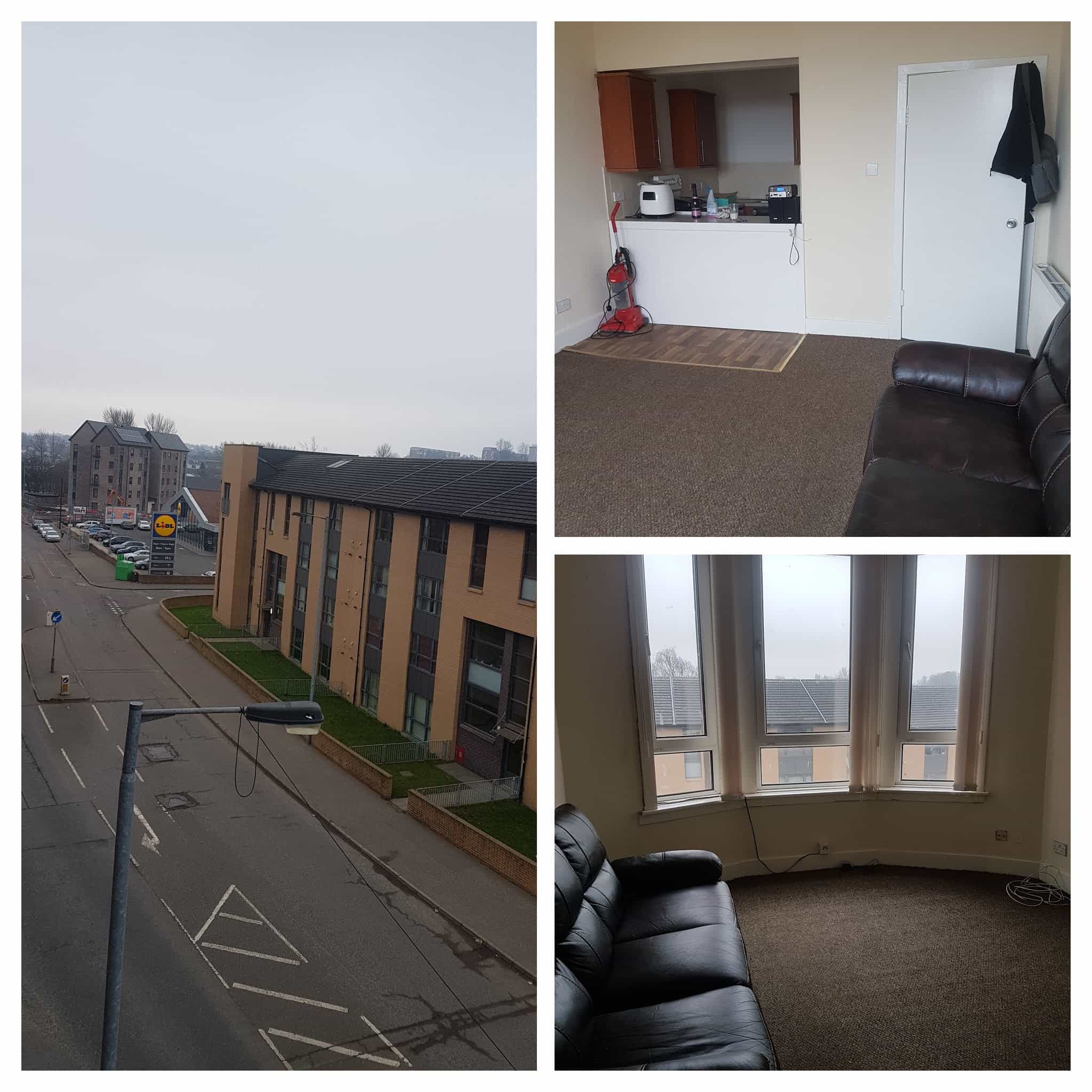
In February 2019, I moved out of my flat in Pollokshaws.
I did not take much with me. That is an understatement. I took almost nothing — a rucksack, some documents, the things that were genuinely irreplaceable. Everything else went. The furniture, the books, the accumulated objects of a domestic life built over years: sold, donated, discarded, given away to whoever wanted them. I walked out of that flat and left behind almost every physical thing I had accumulated to that point in my adult life.
This was not something that happened to me. It was something I chose.
I want to be careful here, because this kind of story can sound like performance — the dramatic gesture, the cinematic moment of release, the man who gave it all away and found himself. It was not like that. It was quieter and stranger and more deliberate than it sounds, and the reason I am writing about it now is not because it was heroic but because it taught me something I have been trying to articulate ever since.
The difference between losing things and releasing them is the difference between subtraction and completion.
When you lose something — when it is taken from you, or ends against your will, or slips away in the ordinary entropy of a life — there is a residue. The thing is gone but the shape of it remains. You feel the absence in the space where it was. And that absence, if you are not careful, becomes a kind of anchor — holding you in relation to what is no longer there, orienting you backward.
When you release something, the dynamic is different. The thing still goes. The space is still empty. But the relationship with the empty space is different, because you made the decision. You are not standing at the edge of a hole that appeared without warning. You dug the hole yourself, deliberately, because you had decided it was time for the ground to be clear.
I had been living, for some time before February 2019, in a life that had the right furniture and the wrong orientation. Not dramatically wrong — nothing had collapsed, nothing was in crisis. Just quietly misaligned. The life I was maintaining and the life I wanted were two different shapes, and the gap between them was gradually becoming more expensive to ignore.
What I understood, in the months before I decided to leave, was that I could not build the second life while I was still fully installed in the first one. Not because the possessions were the problem — they were not. But because they were continuity. They were the physical evidence that this was where I lived, this was who I was, this was the version of the story I was committed to. Getting rid of them was a way of making the decision visible. Of making it real in a way that a private intention never is.
I have come to think of it as the difference between deciding to change and changing.
Deciding is internal, provisional, reversible. You can decide every day for years and never move. I know people who have. I was one of them, for longer than I would like to admit. The decision lives in the mind, protected from the test of reality, always potentially true, never required to prove itself.
Changing is external, concrete, irreversible — or irreversible enough that the reversibility stops being a comfort. Once the furniture is gone, the decision has consequences. Once you have walked out, you cannot pretend you have not. The bridge is not burned, exactly, but it is behind you, and you are facing the other direction.
What came next, after February 2019, was a sequence of things I could not have predicted: a period of genuine lightness, the strangeness of owning almost nothing, the discovery that the things I thought I would miss were largely not missed, and the much slower and more difficult work of building toward something different. That work is still ongoing. It did not resolve cleanly, the way transformative moments are supposed to. But it went somewhere that the life before it could not have reached.
In coaching, I am interested in what people are holding on to that is costing them more than they are admitting. Not always possessions — usually not possessions. More often: a story about themselves, a version of their identity that no longer fits, a role they have been playing for so long that they have forgotten they chose it. The equivalent of a flat full of furniture that belongs to a life they are no longer actually living.
The question is not whether the thing has value. Often it does. The question is whether holding on to it is serving them, or whether the holding on has become the point — a way of not having to confront what would be true if it were gone.
Release is not loss. But it requires the same courage.
What are you holding on to that belongs to a version of your life you have already left?